 Login


 Products



 Go Back to blog listing page
Guidelines for Affordable Home Loan Balance Transfer


Does your interest rate feel too high? Is the EMI eating into your monthly budget? If so, you’ve probably wondered whether another lender would treat you better. Moving your outstanding loan to a new lender is one way to find out.
A home loan balance transfer can bring down your EMI or the total interest you pay, but not every time. It comes down to how much principal is left, how many years remain, what the switch costs and what the new lender is offering.
So before you change lenders, get a clear picture of how it works, whether you qualify and what it will cost you overall.
What Is a Home Loan Balance Transfer?
In a balance transfer, your outstanding home loan moves from your current lender to a new one. The new lender sanctions your application and then settles whatever you owe with the old lender. After that, you repay the new loan on the revised terms.
Let’s say you took your loan a few years ago and a different lender is now offering better terms. Moving the balance could lower your EMI or your overall interest cost. Approval isn’t automatic, though. It still depends on your eligibility, the property assessment and your paperwork.
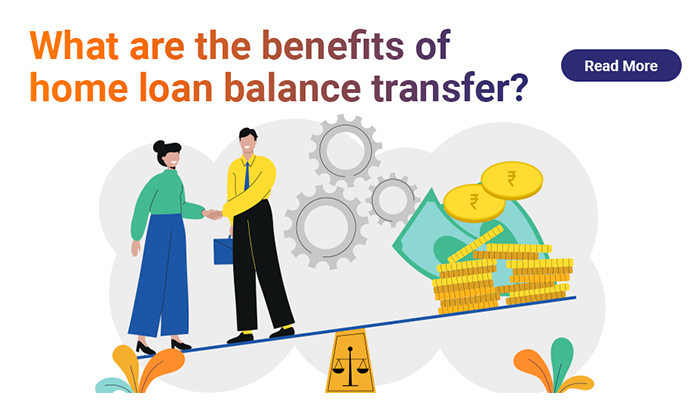
Benefits of Transferring Your Home Loan
When the new terms suit you better, a transfer can help in a few ways.
Lower Interest Rates
A lower rate means you pay less interest over the rest of the tenure. How much less depends on your outstanding principal and the time you have left. Don’t assume a transfer will pay off. Compare the actual offers you’re getting.
Reduced EMI Burden
If the new lender gives you a lower rate and the tenure doesn’t change, your EMI may drop. You could also go the other way and keep paying a similar EMI, which might help you close the loan sooner. That depends on the revised terms.
Better Loan Terms
Sometimes a transfer gets you repayment terms that fit your life as it is now. Some lenders also offer a top-up loan, subject to eligibility and their own policies. If you’re tempted by one, look at that extra borrowing on its own before you say yes.
When Should You Consider a Balance Transfer?
Think about it if any of these sound like you:
- Your current interest rate is on the high side.
- A big chunk of the principal is still outstanding.
- Your income or credit profile has improved.
- Your repayment terms no longer fit your budget.
Picture a homeowner in a Tier-2 city whose income has grown over the years. Comparing offers could be a sensible move for them. What counts is the savings left after charges, not the headline rate.
Eligibility Criteria for Home Loan Transfer
Each lender sets its own rules, but a few things come up again and again. They’ll look at your repayment history, since regular EMI payments show you can be trusted to pay. They’ll check your credit score to judge your creditworthiness. They’ll also look at your income, your existing obligations, and your ability to repay.
Then there’s the property. Your ownership records and other documents have to meet the lender’s requirements. The remaining principal and your repayment record can also influence the decision.
Some lenders ask for a minimum repayment period before they’ll consider a transfer. And even if you tick every general box, sanction isn’t guaranteed.
Documents Required for Balance Transfer
Have these ready and the application will move along more smoothly:
- Identity proof: Your PAN card and an accepted identity document.
- Address proof: An accepted document that confirms where you live.
- Income proof: Salary slips, Form 16 or Income Tax Returns (ITR), whichever applies.
- Bank statements: Records of your income and transactions.
- Existing loan documents: The outstanding balance statement, your repayment history, and the foreclosure statement.
- Property documents: Ownership records, the property document chain and anything else the lender asks for.
If you’re self-employed, expect to hand over extra business and financial records. Check the latest list with the new lender before you apply.
Key Factors to Evaluate Before Transferring
A lower rate looks great on paper. These three things tell you whether the switch actually makes sense.
Processing Fees
Moving a loan may involve charges such as processing fees, legal verification fees, technical valuation fees, documentation charges and applicable government levies, depending on the lender's policies. Before proceeding, ask the new lender for a complete schedule of charges and compare the total transfer cost against the estimated savings from the lower interest rate.
Remaining Loan Tenure
Where you are in your repayment matters. In the early years, more of each EMI goes towards interest. If you’ve already paid off most of the loan, there’s simply less left to save. Compare the total interest you’d pay under both options.
Credit Score Impact
The new lender will typically review your credit report as part of the balance transfer evaluation process. A single credit enquiry generally has a limited impact on creditworthiness, but making multiple loan applications within a short period may affect how lenders assess your profile. Maintaining a strong repayment record and avoiding unnecessary credit applications can support a smoother approval process.
Step-by-Step Process for Home Loan Balance Transfer
- Compare lenders and loan terms: Review interest rates, tenure options, charges, customer service standards and other loan features.
- Estimate overall savings: Use a home loan EMI calculator to compare your current loan with the proposed loan and assess potential savings.
- Check eligibility requirements: Review the new lender's income, credit, repayment history and property-related criteria.
- Collect the required documents: Obtain your outstanding loan statement, repayment track record and property documents.
- Apply for the balance transfer: Submit your application along with the supporting documents.
- Property and credit assessment: The new lender may conduct legal, technical and credit evaluations before taking a decision.
- Loan takeover and closure of existing loan: Upon approval, the new lender settles the outstanding amount with the existing lender. Obtain confirmation of loan closure and collect all applicable property-related documents from the previous lender.
Common Mistakes to Avoid
Most of these are easy to dodge if you know about them:
- Comparing only interest rates: Other charges can eat into your savings.
- Stretching the tenure without doing the sums: A lower EMI can hide a higher total interest bill.
- Skimming the repayment conditions and fees: Read them before you commit.
- Sending in incomplete documents: Missing documents can slow everything down.
- Forgetting to ask your current lender: You might be able to negotiate revised terms with them.
Make an Informed Decision About Your Home Loan
A balance transfer can make repayments easier, as long as the new terms give you real value. Before you switch, compare the outstanding principal, the remaining tenure, the charges, and the total interest payable.
The IIFL Home Loans website has housing finance options and resources if you want to explore further. Read the terms carefully, because every transfer is subject to eligibility, verification, and the lender’s policies.
Tags

Most Read Blogs

Balance Transfer Refinancing


Frequently Asked Questions (FAQ’s)
Can a home loan balance transfer reduce my EMI?
Ans:
Yes, it can. If the new lender offers a lower rate and the tenure stays the same, your EMI may fall. By how much depends on your outstanding principal and the revised terms.
When can I transfer my existing home loan?
Ans:
Once you meet the new lender’s eligibility requirements. Some lenders also want a minimum repayment period and a satisfactory repayment record.
Does a home loan balance transfer involve charges?
Ans:
Yes. Depending on the lender and the transaction, you may pay processing, legal, administrative, or property evaluation charges. Check the fees before you go ahead.
Will there be any impact on my credit score due to a home loan balance transfer?
Ans:
The new lender will usually review your credit report as part of the application process. While a single credit enquiry generally has a limited impact, multiple loan applications within a short period may affect your credit profile. Your repayment history and overall credit behaviour continue to play an important role in the approval decision.
Are all home loan balance transfers good?
Ans:
No. A balance transfer will only work out for you if the benefits exceed the costs.
What can we help you with?

Home Loan

Secured Business Loan

Balance Transfer

Home Improvement Loan

Home Loan for Uniformed Services

NRI Home Loan
Home Loan
Secured Business Loan
Balance Transfer
Home Improvement Loan
Home Loan for Uniformed Services
Get instant support with existing loan related queries

Raise a Request Get instant access to your existing Loan Account with us Raise a Ticket 

Call Helpline Speak with our Customer Support Executive on 1860 267 4999

Visit Nearby Branch You can walk into any of our 300+ branches, spanning across 18 states Get Directions
Our Brands & Subsidiaries


Insurance Partners


HDFC Life Insurance Learn more
Bajaj Life Insurance Learn more
ICICI Prudential Life Insurance Learn more
Go Digit General Insurance Learn more
Aditya Birla Capital Insurance Learn more
Bajaj General Insurance Learn more


