 Login
Login


 Products


 Go Back to blog listing page
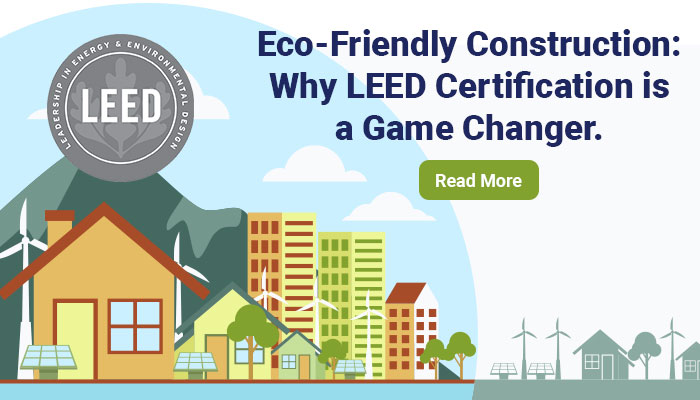
Eco-Friendly Construction: Why LEED Certification is a Game Changer



In the world of sustainable construction, one acronym stands out as a symbol of excellence and environmental responsibility—LEED. This abbreviation, which stands for Leadership in Energy and Environmental Design, represents a transformative approach to green building construction and construction that has left an unforgettable mark on the world of sustainable architecture.
In this article, we will explore the world of LEED, what it means, how it is achieved, and why it has become a cornerstone of sustainable construction. Read more to understand the transformative power of LEED certification in building a more sustainable future.
What is the LEED Certificate?

LEED certification is not just a label, it is a testament to a building's commitment to environmental sustainability, efficiency, and occupant well-being. In a world grappling with environmental challenges, LEED has emerged as a guiding light, setting the standard for green building practices.
Understanding LEED Certification
LEED or Leadership in Energy and Environmental Design, which stands for Leadership in Energy and Environmental Design, represents a paradigm shift in how we approach building design, construction, and operation. More than just a certification, it embodies a commitment to creating sustainable, efficient, and environmentally responsible structures that prioritize both people and the planet.
The Significance of LEED in Sustainable Construction
LEED's significance in sustainable construction extends far beyond its acronym. It represents a fundamental shift in the way we conceive and construct buildings. It emphasizes resource efficiency, environmental responsibility, and human health and comfort.
LEED certification is not merely about achieving a specific score. It is about a commitment to reducing a building's environmental footprint and creating spaces that prioritize the well-being of those who live in it.
How to achieve LEED Certification?
To achieve LEED Certification, buildings must follow a rigorous set of criteria and standards that evaluate their environmental performance and sustainability. These criteria contain a wide range of factors, including energy efficiency, water conservation, materials selection, indoor environmental quality, and sustainable site development.
Levels of LEED Certification
LEED certification comes in various levels, each reflecting a different degree of sustainability and environmental responsibility. These levels include:
1. Certified
The entry-level certification indicates a commitment to green building practices and meeting the basic criteria for sustainability.
2. Silver
A higher level of certification signifies a greater emphasis on sustainability and efficiency in building design and operation.
3. Gold
Buildings earning the Gold certification have demonstrated a substantial commitment to sustainable construction and operation, exceeding the basic requirements.
4. Platinum
The highest level of LEED certification is awarded to buildings that have gone above and beyond in their commitment to sustainability and environmental responsibility. Platinum buildings are true leaders in energy and environmental design, setting the standard for green construction.
These levels provide a clear framework for evaluating a building's sustainability performance, allowing project teams to choose the level that aligns with their sustainability goals and aspirations.
Bottom Line
In a world conscious of its environmental impact, LEED certification has emerged as a pivotal force driving sustainable construction practices. It signifies a commitment to creating structures that not only offer efficiency and comfort but also prioritize the well-being of the planet and its residents.
LEED certification goes beyond being a mere label, it is a testament to environmental responsibility and a commitment to resource efficiency. With different certification levels, it offers flexibility to match a project's sustainability goals, allowing builders and developers to align their projects with their environmental aspirations.
The importance of LEED in sustainable construction cannot be overstated. It represents a transformative approach that balances economic prosperity, environmental preservation, and human well-being. LEED-certified buildings are pioneers, leading the way toward a greener, more sustainable future.
Take the leap towards sustainable housing with IIFL Home Loans' Green Value Partner program—your gateway to eco-friendly, affordable homes.
Frequently Asked Questions (FAQs)
Q1. How does LEED certification benefit building occupants?
Ans. LEED-certified buildings prioritize indoor air quality, comfort, and well-being, creating healthier and more pleasant living and working environments.
Q2. Is LEED certification only for new construction, or can existing buildings also become LEED-certified?
Ans. LEED offers certification for both new construction and existing buildings through different rating systems, such as LEED for Building Operations and Maintenance.
Q3. Are LEED-certified buildings more expensive to construct compared to traditional buildings?
Ans. While initial construction costs may be slightly higher, LEED-certified buildings often provide long-term cost savings through reduced energy and water consumption.
Q4. How does LEED certification impact property value?
Ans. LEED-certified buildings have higher property values due to their sustainability features, energy efficiency, and environmental responsibility.
Q5. Can LEED certification help in achieving sustainability goals and meeting regulatory requirements?
Ans. Yes, LEED certification provides a clear framework for meeting sustainability goals and often helps meet or exceed regulatory requirements related to environmental performance.
Tags

Most Read Blogs

What can we help you with?

Home Loan

Secured Business Loan

Balance Transfer

Home Improvement Loan

Home Loan for Uniformed Services

NRI Home Loan
Home Loan
Secured Business Loan
Balance Transfer
Home Improvement Loan
Home Loan for Uniformed Services
Get instant support with existing loan related queries

Raise a Request Get instant access to your existing Loan Account with us Raise a Ticket 

Call Helpline Speak with our Customer Support Executive on 1860 267 3000

Visit Nearby Branch You can walk into any of our 300+ branches, spanning across 18 states Get Directions
Our Brands & Subsidiaries


Insurance Partners


HDFC Life Insurance
Learn more
Bajaj Life Insurance
Learn more
ICICI Prudential Life Insurance
Learn more
Go Digit General Insurance
Learn more
Aditya Birla Capital Insurance
Learn more
Bajaj Allianz General Insurance
Learn more


